Why Sweet Amalia Isn’t Opening This Year — and What It Reveals About the Pinelands
A well known restaurant located within the Pinelands will not open this season due to issues with the Pinelands Commission. This situation also raises concerns about rule enforcement in Franklin Township.
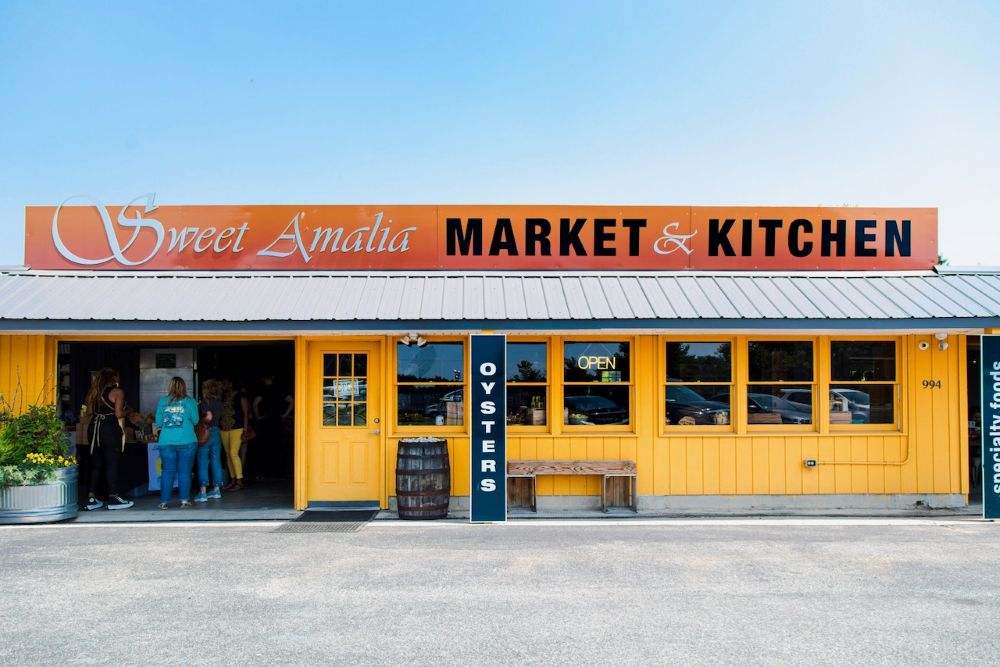
The beloved restaurant Sweet Amalia in Franklin Township has announced it will not open this season due to an ongoing issue with the Pinelands Commission. For many loyal customers, this is a disappointment. But to understand what’s really happening, it’s important to unpack how Pinelands regulations work—especially when it comes to septic systems—and how local enforcement decisions can shape these outcomes.
Why septic systems matter in the Pinelands
In much of the Pinelands, public sewer service is intentionally limited to designated growth areas such as Regional Growth Areas, Pinelands Towns, and certain Pinelands Villages. Everywhere else—including rural development areas like where Sweet Amalia is located—properties must rely on septic systems. This is not accidental; it’s one of the primary tools used to limit development intensity and protect the region’s fragile ecosystem.
Septic regulation is especially critical because the Pinelands sits atop the Kirkwood-Cohansey aquifer, a vast and ecologically sensitive groundwater system beneath the New Jersey Pine Barrens. The Pinelands environment is naturally low in nutrients. Species like pitch pine and the region’s famous carnivorous plants evolved to thrive in these nutrient-poor conditions, but they can be quickly outcompeted if nitrogen levels rise. Septic discharge, which releases nitrogen into groundwater, can act like a slow-moving “nutrient bomb” if not carefully controlled.
How the rules work
To prevent groundwater contamination, the Pinelands Commission requires septic systems to meet strict nitrate dilution standards. In practice, this means that the nitrogen released from wastewater must be diluted enough in groundwater so that concentrations remain below regulatory thresholds at the property boundary.
When a project runs into septic limitations, applicants typically have three options:
- Acquire additional land and deed restrict it to dilute wastewater impacts
- Install an advanced (alternate design) septic system that removes more nitrogen
- Reduce the intensity of use, such as limiting seating capacity or operations
What happened at Sweet Amalia
Sweet Amalia’s restaurant use was established in 2021 as a farm market with take-out and picnic seating. However, the owners were apparently unaware that Pinelands Commission approval was required to expand. That oversight triggered a retroactive application process beginning in 2023.
Since then, the applicant has worked through a complicated and evolving technical process to bring the site into compliance. Early efforts pursued all three available pathways: acquiring additional land (including the neighboring lot and a proposed deed restriction on a third parcel), designing a high-performance septic system, and scaling back elements of the project such as a separate ice cream building.
However, a critical turning point came in December, when the plan to deed restrict neighboring land fell apart. That collapse significantly constrained the project’s ability to meet nitrate dilution requirements through land area alone. Other potential strategies had already hit dead ends earlier in the process.
This left the applicant with a single remaining path: relying on the most advanced septic technology available. The proposal shifted toward using a high-performance system such as a Hoot ANR or Amphidrome unit operating at the very edge of its design capability. But even then, the numbers are daunting. Based on default Pinelands design standards, such a system would only support a roughly 35-seat restaurant—at an estimated cost exceeding $500,000. For a small, seasonal business, that is simply not financially viable.
In response, the applicant has now proposed a more creative, interim approach. The revised plan would transfer historical, grandfathered wastewater flows from the existing ice cream stand to the farm stand. Because the ice cream stand has historically relied on an older cesspit—far less effective at nitrogen removal—while the farm stand is already served by a more advanced FAST treatment system, this shift could actually reduce overall nitrogen impacts compared to past conditions.
If approved, this approach would allow Sweet Amalia to reopen with a significantly reduced footprint—approximately 22 seats. While far from ideal, it would enable the business to operate, gather real-world data on water use and nitrogen output, and potentially support a more flexible and realistic septic design in a future application.
Despite substantial progress, the process remains unresolved. Many of these issues appear to stem not from fundamental disagreement, but from the complexity of the application and shifting project parameters. As plans evolve—particularly after the loss of the deed restriction option—new rounds of review and technical validation are required. Until the application is deemed complete and approved, the restaurant cannot legally operate with seating.
A common violation—but there are others
To be clear, failing to obtain Pinelands approval before expanding a business is a violation and needs to be addressed. But it is also a relatively common situation. Many property owners simply do not realize that the Commission must review certain changes before local approvals take effect.
But the Sweet Amalia case stands in sharp contrast to another situation unfolding nearby—one that raises uncomfortable questions about how rules are enforced in Franklin Township.
Just a few miles away, Timothy Doyle—the township’s deputy mayor—illegally clearcut roughly 15 acres of forest on his property in June of 2025. The clearing was extensive, removing mature forest habitat in a region where such ecosystems are supposed to be carefully protected.
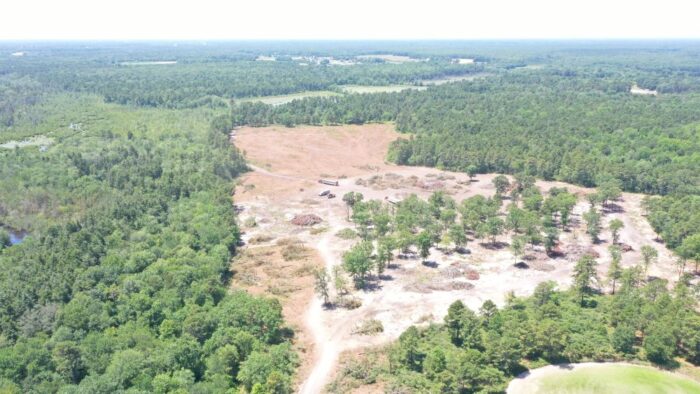
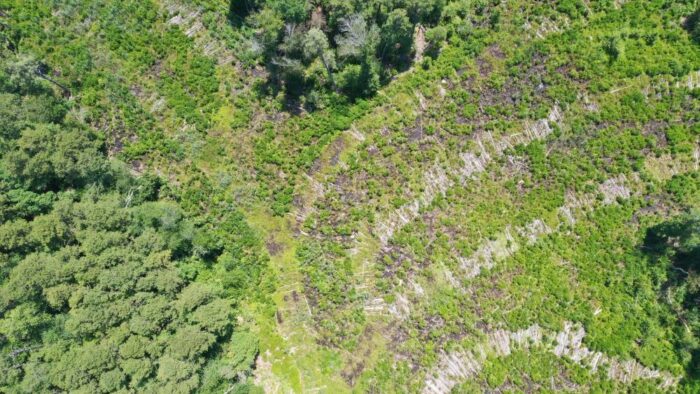
Unlike the Sweet Amalia case, which has involved years of technical review and regulatory scrutiny over septic calculations and paperwork, the response from township officials to the Doyle clearing has been conspicuously muted. To date, there has been little evidence of meaningful local enforcement action, and our requests for information have largely gone unanswered.
That discrepancy is difficult to ignore. A small business attempting—at considerable expense—to retrofit itself into compliance faces prolonged delays and uncertainty, while a large-scale environmental disturbance tied to a sitting public official appears to have drawn far less urgency from local authorities.
Slow enforcement and limited resources
The potential inconsistency is compounded by the slow pace of response from the Pinelands Commission itself. In the case of the illegal clearing, it took nine months before the Commission formally contacted the township seeking an explanation for how the clearing was allowed to occur.
Part of the reason is structural. The Commission has been chronically underfunded for years. Application fees paid by developers only cover about 63 percent of the staff time required to review projects, leaving the agency dependent on state appropriations that have not kept pace with workload demands. Requests for additional staff have repeatedly gone unaddressed by the Governor and Legislature.
The result is a regulatory system stretched thin—one where both environmental enforcement and application reviews can move frustratingly slowly.
The bigger lesson
The Sweet Amalia situation illustrates several realities about the Pinelands regulatory system. The rules exist for good reason: protecting the region’s groundwater and ecosystems requires careful limits on wastewater and development intensity. But the system also depends heavily on local enforcement and adequate state resources.
When local officials aggressively pursue minor violations but ignore major ones—especially when those violations involve people in positions of power—it undermines public confidence in the entire system.
For now, Sweet Amalia remains closed while the regulatory process continues. But the bigger question for Franklin Township is whether its leaders will apply the same level of scrutiny to environmental violations in their own backyard—or whether accountability will depend on who happens to be responsible.

We’re moving to the Pinelands and we’re environmentally conscious. We read a lot of the rules prior to even putting an offer on the property. We wanted to understand and follow the rules with respect to preserving the ecosystem. This article was well written and helped us understand a bit more about the area to which we are moving. Thank you. *We’ll be joining the Alliance again very soon!
Great reporting.
Not prosecuting the deputy mayor, Timothy Doyle is a disgrace. No one is above the law. Franklin Township residents should raise hell. Anyone living in protected areas knows the strict rules against doing improvements to their properties that they have to follow. Then this guy CLEARS a large area. No. Fine him and make him replant the trees.
I am unfamiliar with this restaurant as i do not live in the area, however this is a pure disgrace for this man to get away with something clearly illegal while this struggling popular restaurant that is loved by many and should not have to go thru this to run their business. I am praying this can be resolved and the pinelands commision comes to their senses.
Sweet Amalia is such a dining treasure that provides a wonderful farm to fork experience of SJ produce, meats, seafood & more! Any Regulatory review needs to consider the market’s SEASONAL presence and limited 5 days of operation.
Please reach out to receive local farmers input as to Sweet Amalia’s impact on their businesses. Support SJ Farmers!
It’s difficult to understand how the Purple Penguin ice cream stand (next door) was allowed to operate for years?! How can picnic tables be okay for one business, but disallowed for the neighboring seasonal business?
Does Franklin Township need new oversight to improve fair regulation enforcement? Egregious deforestation – obvious crime is overlooked while septic requirements for a 2 season market require an $800,000 investment!?
Restore rights to Sweet Amalia! Restore great food & charm to South Jersey life! Thank you!
I was already familiar with Sweet Amalia’s situation, but not from this POV. I agree wholeheartedly that the Pinelands regulations are important, yet oftentimes burdensome. For those reasons, they must be fairly enforced. Perhaps your article will remind the Pinelands Commissioners what their public duties actually require.