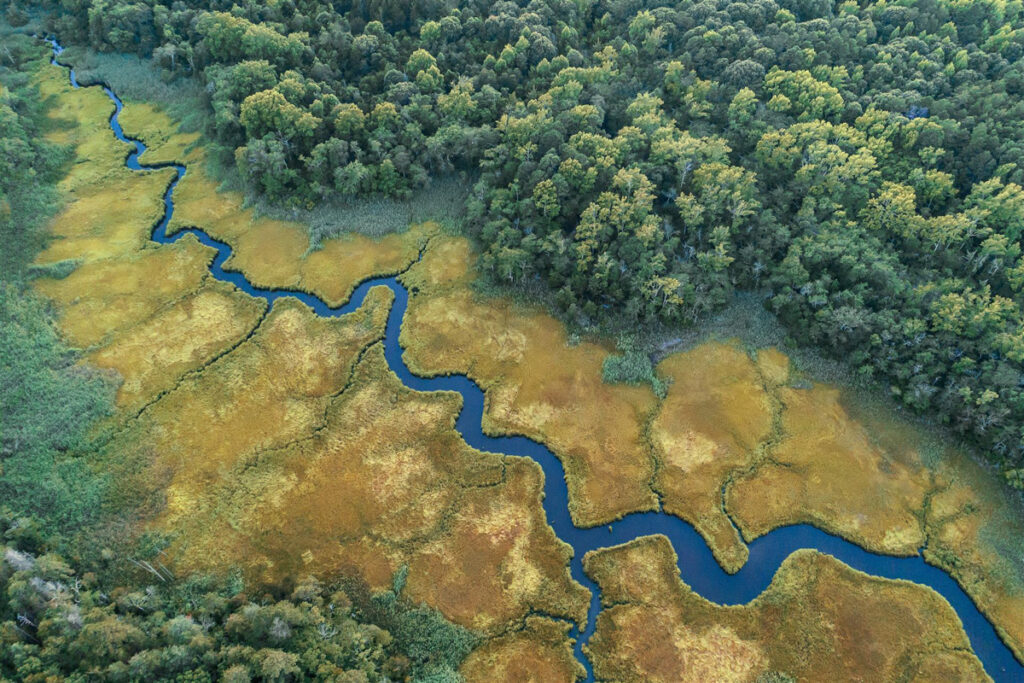
Wetlands Fractals by christopher smith
State of the Pinelands: A Moment to Strengthen New Jersey’s Environmental Leadership
The release of the Pinelands Alliance’s new report, State of the Pinelands, comes at a pivotal moment for environmental protection in both New Jersey and the nation.
Across the country, long-standing federal environmental safeguards are being rolled back. Protections that once shielded public lands, wildlife, clean air, and water are facing uncertainty. When federal leadership falters, the consequences ripple outward—affecting ecosystems, communities, and future generations.
But here in New Jersey, we have a different opportunity. With Mikie Sherrill taking office as governor, the state can move in the opposite direction. Rather than weakening protections, New Jersey can strengthen them, building overlapping safeguards that reinforce one another. When environmental protections exist at multiple levels of government, they become more resilient. If one layer falters, others remain strong.
Building on a Strong Foundation
New Jersey has long been a national leader in environmental policy, and now is the time to build on that legacy. The State of the Pinelands report outlines several priorities that could help the new administration strengthen environmental protection statewide.
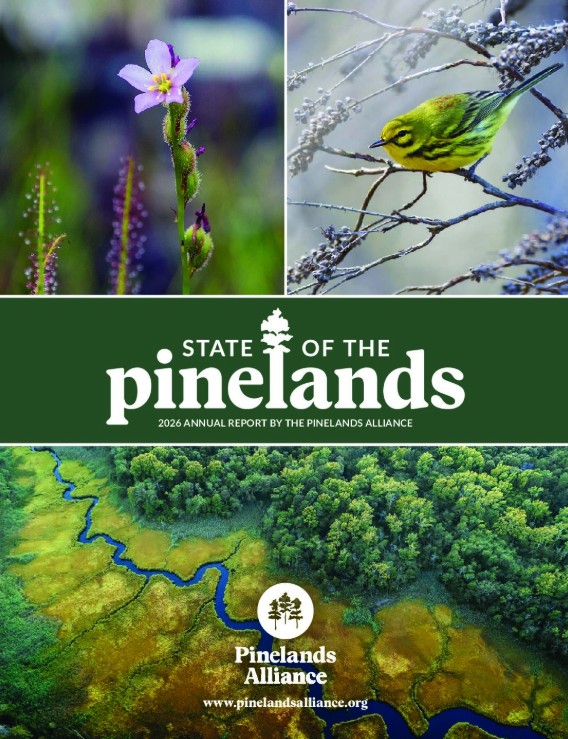
First is the full implementation of New Jersey’s coastal resilience rules. These regulations are essential to protecting communities from flooding and sea-level rise. In the Pinelands region, the stakes are especially high because the aquifer system beneath the forest provides drinking water for roughly one million residents and supports thousands of acres of farmland. Protecting this water supply is fundamental to both public health and the regional economy.
Second, stronger enforcement is needed to address off-road vehicle damage on public lands. Initiatives like the Visiting Vehicle Use Map in Wharton State Forest demonstrate that responsible recreation and ecosystem protection can coexist. But maps and rules alone are not enough—adequate staffing and consistent enforcement are necessary to protect fragile landscapes.
Third, the state must invest more deeply in its public lands. Parks, forests, wildlife management areas, and historic sites are experiencing record visitation while maintenance backlogs continue to grow. Strengthening the budget and staffing of the New Jersey Department of Environmental Protection would help ensure these places remain healthy and accessible for future generations.
The report also calls for progress on several major legislative initiatives, including the Polluters Pay Act (formerly the Climate Superfund Act), the New Jersey Clean Energy Act establishing a 100 percent clean electricity standard, and a constitutional Green Amendment guaranteeing residents the right to clean air, pure water, and healthy environments.
Together, these measures would create durable, overlapping protections that reinforce one another—exactly the kind of layered environmental governance needed in an uncertain federal landscape.
Why the Pinelands Commission Matters
Strong laws are essential, but they are only as effective as the institutions responsible for enforcing them. The New Jersey Pinelands Commission is the steward of the Pinelands Comprehensive Management Plan, one of the most successful regional land-use frameworks in the United States. The Commission’s oversight has helped protect more than a million acres of forests, wetlands, and communities within the Pinelands.
But that system only works when the Commission is adequately funded, with a full complement of Commissioners and staff. Currently, one seat on the Commission has remained vacant since the death of Commissioner Edward Lloyd in August 2023. Filling that vacancy is essential to maintaining rigorous oversight and public confidence in the institution.
At the same time, the Commission faces new and emerging challenges—from the rapid growth of data centers to the escalating impacts of climate change. Rising groundwater levels, shifting ecosystems, and more intense storm events are already reshaping the Pinelands landscape. For several years, the Commission has requested additional resources to expand staff capacity to address these climate impacts. Those requests have yet to be prioritized in the state budget.
If the state expects the Commission to navigate the next generation of environmental challenges, it must provide the tools and funding needed to do so.
Progress Worth Celebrating
Despite these challenges, there have been meaningful victories, the most significant of which is the redesignation of the headwaters of the Black Run Preserve. Recent amendments to the Comprehensive Management Plan effectively rezoned 835 acres of land, reducing the number of homes that could be built there by 87 percent. Taking it a step further—the New Jersey Conservation Fund announced on March 3, 2026 that a contract of sale is now in place to permanently preserve the land.
This success represents decades of advocacy by residents, conservation groups, and dedicated public servants. It is also a reminder that strong institutions and persistent public engagement can achieve lasting conservation outcomes.
Layered Protections for the Future
The future of the Pinelands—and New Jersey’s environment more broadly—will depend on the strength of the systems we build today. When federal protections weaken, states must step forward. New Jersey has the chance to be a bulwark, demonstrating that science-based governance and long-term thinking still matter. With thoughtful leadership and sustained investment, the state can build environmental protections that are layered carefully and deliberately, so they endure for generations to come.

Indeed, the victory to preserve Black Run Reserve is wonderful news.