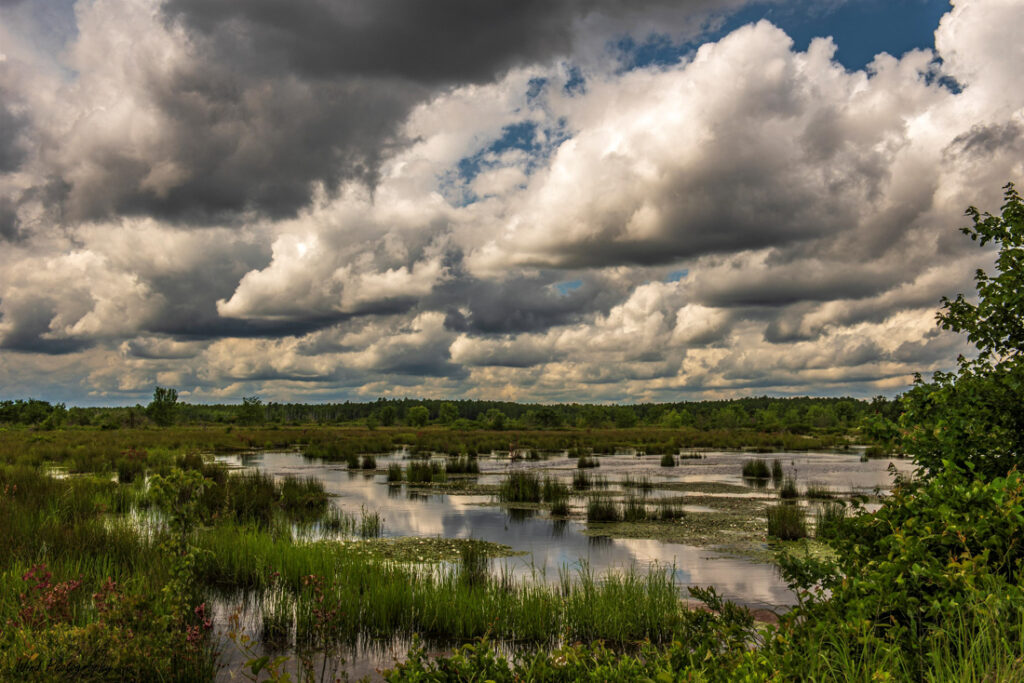
Stormy Pinelands Wetland 2 by Harry Wind
Policy Notes: March 2026
The Pinelands Commission addresses invasive fish species and cell phone towers in the Pinelands. Policy Notes are designed to update the public on the activities of the Pinelands Commission, which have been summarized by Pinelands Alliance staff who attend all public meetings of the Commission.
A Stitch in Time: Stopping Snakeheads Before They Spread
The NJDEP and Pinelands Commission are taking urgent steps to contain an invasive species that have been found in Pinelands water bodies in the Mullica River watershed, including Tindall Lake and Archway Lake. To remove the invasive species, a pesticide treatment will be applied to the water bodies and would eliminate all gill-breathing fish to ensure the complete removal of the threat.
So why such urgent and drastic action? The answer lies in the fish at the center of the plan: the Northern Snakehead.
We’re talking about a fish—not a snake! Native to parts of Asia, the Northern Snakehead is one of the most concerning aquatic invasive species in the United States. It is a powerful predator with a wide diet that includes fish, frogs, and other aquatic wildlife. Snakeheads grow quickly, reproduce rapidly, and aggressively compete with native species for food and habitat. In ecosystems where they become established, they can disrupt entire food webs.
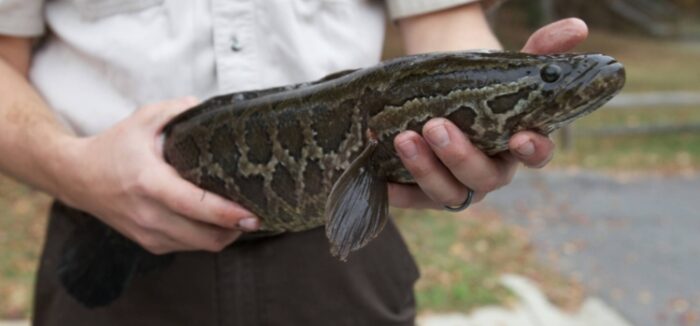
That threat is especially serious in the New Jersey Pine Barrens. Introducing a highly adaptable predator like the Northern Snakehead into these fragile systems could have ripple effects throughout the food chain—impacting everything from small forage fish to amphibians and birds that rely on healthy aquatic habitats.
If snakeheads spread beyond isolated water bodies, eradication becomes far more difficult and expensive. That’s why early action matters. While chemical treatment is never undertaken lightly, wildlife managers often view rapid response as the best chance to prevent a long-term ecological problem. The current review process will help determine whether the proposed treatment can move forward while protecting the surrounding environment.
Can you hear see me now?
Where should cell phone towers be built in the Pinelands? The P&I Committee considered a proposed amendment to AT&T’s Local Communications Facilities Plan—an update that sparked a thoughtful discussion about balancing reliable cell service with the Pinelands’ unique landscape. Planning staff member Mr. Lanute explained that the amendment would shift one previously approved but unbuilt tower site from Wharton State Forest to a new location within the Village of Chatsworth. The earlier site, approved years ago, ultimately proved impractical because it was far from the residents it was meant to serve, located on state land, and would have required costly infrastructure extensions.
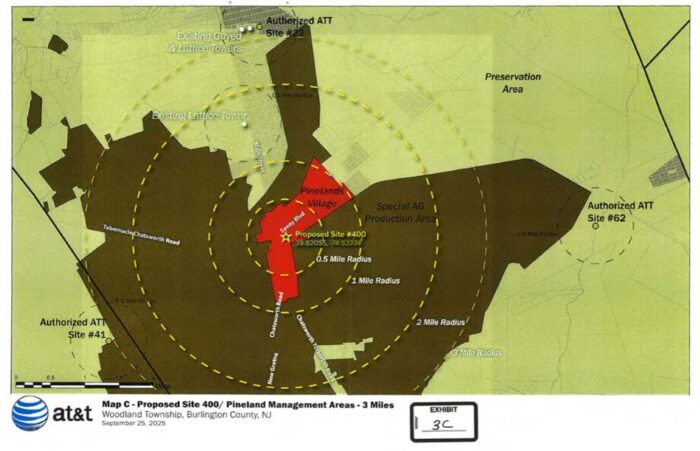
After reviewing nearby structures, AT&T found that none were tall enough, had available capacity, or could close the coverage gap. An independent radio-frequency expert confirmed what many residents likely already know from experience: there is a real gap in cellular coverage in the Chatsworth area, and a site closer to the village could help address it. Importantly, staff emphasized that the amendment would not increase the overall number of towers in the plan—it simply replaces one location with another within the same search area.
Staff also clarified an important point in the process. At this stage, the Commission is only considering whether there is a demonstrated need for improved coverage within the designated area. Questions about the exact placement of a tower, how it would look, and how visible it might be from nearby roads or homes would come later, if a development application for a specific site is submitted. That future review would include detailed visual simulations and a closer look at potential impacts on the surrounding landscape.
Commissioners used the opportunity to explore broader questions about telecommunications infrastructure in the Pinelands. Some reflected on how earlier plans from the early 2000s tended to place towers on the edges of communities, likely to protect village viewsheds. Today, however, the conversation increasingly includes the importance of reliable communication for safety, emergency response, and daily life. Commissioners also asked what happens to towers as technology evolves—whether older structures are removed or replaced, and how often those changes come before the Commission. Staff noted that while tower removals do happen and are sometimes required through lease agreements, not every situation necessarily triggers a Commission review.
The discussion also touched on the future of wireless technology. Commissioners asked how emerging systems like 5G, small-cell networks, and distributed antenna systems might change the need for large towers. Staff explained that while these technologies can work well in denser areas, they typically cover smaller ranges and may be less practical in rural regions like the Pinelands, where broader coverage is still needed.
After the discussion wrapped up, the Committee voted to recommend certification of the amendment to the full Commission, which approved it on March 13. You can watch the full discussion on the YouTube channel of the Pinelands Commission.
This latest amendment also follows years of debate over a proposed 120-foot cell tower at the Woodland Township Volunteer Fire and EMS station in Chatsworth. That earlier proposal, advanced by Tower North, stalled after a 2022 review by the New Jersey Pinelands Commission raised doubts about whether the project could legally qualify as an “accessory use” to the fire station. While the need for improved cellular service was not disputed, regulators questioned whether the tower would primarily serve emergency responders or the general public—an important distinction under Pinelands rules. The project drew opposition from nearby residents concerned about visual impacts, property values, and perceived health risks, even as others pointed to persistent gaps in cell coverage. The history of that proposal underscores the ongoing challenge in Chatsworth: finding a solution that balances community concerns, regulatory constraints, and the growing demand for reliable wireless service.
Still waiting for Judgement…
The legal case regarding the challenge to the Kirkwood-Cohansey aquifer protections. Why is it taking so long? We’ve been expecting a decision in this case since late last year. Pinelands Commission staff are hoping that this is a good sign, that perhaps the “case is so trivial that the court is keeping itself busy with other things.”
We summarize the case on our website: After the Pinelands Commission strengthened water withdrawal rules in late 2023 to protect the Kirkwood-Cohansey Aquifer (read more here), Clayton Sand Company filed an appeal in early 2024, contending overreach and defective rulemaking. Winslow Township aligned with the challenge as amicus in late 2024. The Alliance has aligned itself with the Pinelands Commission as amicus to defend the rules. As of early 2026, the litigation remains pending in the Appellate Division.
Annual Report of the Pinelands Commission
The Pinelands Commission released its annual report which summarizes the agency’s activity over the course of 2025. You can read the full report online.
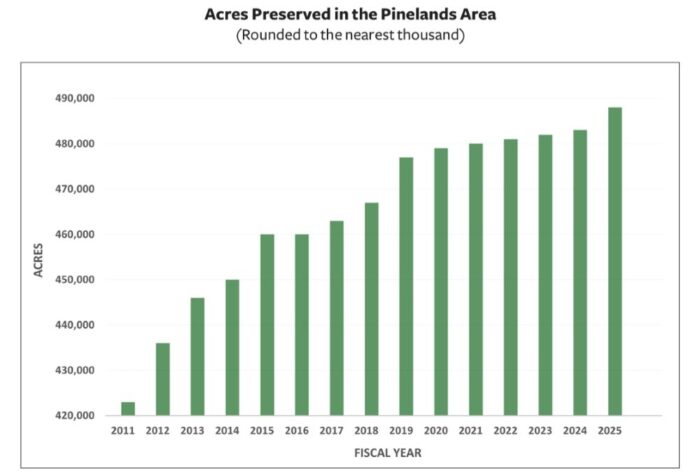
Among other updates, the report mentions that approximately 488,000 acres protected in the NJ Pinelands area, which is about 52% of the total area.
Months since the Pinelands Municipal Council Last Met: 41
