Vineland Data Center
A Town Hall Too Late - Vineland Data Center
DataOne is building a data center in Vineland, NJ. Residents were not kept up to date on the project.
A Town Hall Held Too Late
“Fast” was the word DataOne CEO, Charles-Antoine Beyney, used to describe the process and sudden materialization of the 350-megawatt, 2.6 million sqft data center currently being constructed in Vineland, NJ. “Reckless” may be more appropriate. It’s the playbook that most AI data center developers have followed in order to overwhelm overburdened communities across the country. Move quickly before they know what hit them.
At the January 21st, 2026 town hall, Mr. Beyney described a situation in which things were moving very rapidly, and changes were being made on the fly (unbeknownst to the community). Several innovative technologies are going to be employed, but ultimately the combination of technologies has never been tested together, essentially making this project a proof of concept. Mr. Beyney made many promises to the people of Vineland regarding environmental and community impacts, but the town hall was the first time he took any steps to earn their trust. There are also no safeguards in place to ensure these promises come to fruition, or that DataOne won’t cut and run after completing the project, leaving the town with a vacant behemoth or a new owner unencumbered by their predecessors’ assurances. Unsurprisingly, Vineland’s political leaders took a back seat, only in attendance to preface the meeting by speaking of decorum and respect towards the ‘honored’ guest. As DataOne asks for patience from those already being impacted, a lot of unknowns and big “ifs” remain.
Community Concerns
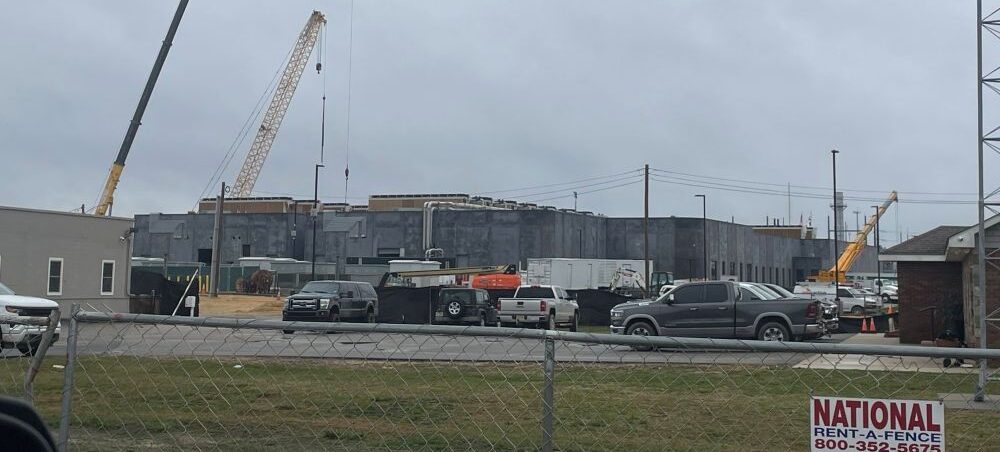
The town hall held at the local theater was the first real opportunity that residents had to ask questions and voice concerns, and the room was packed. But with phase one of the project nearly complete, the train has already left the station.
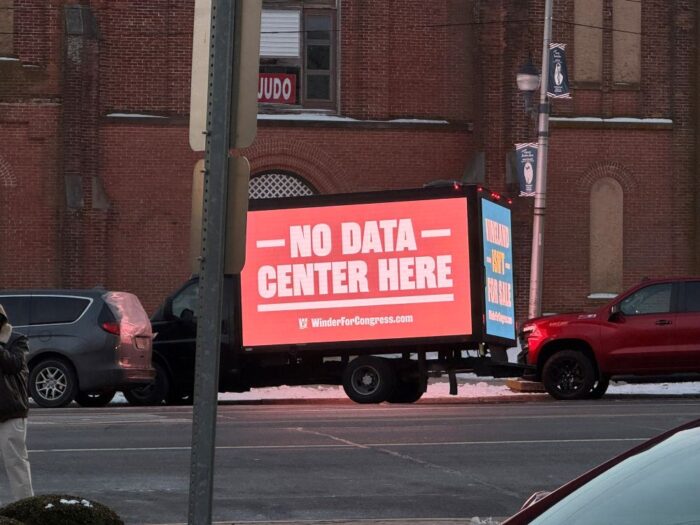
You might expect questions regarding potential community impacts and benefits from a 2.6 million sq ft data center (or power plant) to have been asked by council members or planning board members years ago at open public meetings when the project was up for discussion, but they are surprisingly (or unsurprisingly depending on your level of cynicism) absent from the records we reviewed. Vineland’s political leaders’ part in this whole project can only be described as negligent, as they‘ve taken all of the developer‘s claims at face-value without examination. But, with residents and other stakeholders gathered, Mr. Beyney provided a brief presentation on the project, responding to pre-submitted questions, but also opened the floor to Vineland residents who were finally able to ask questions and voice concerns. Generally, people were worried about noise (which has already become an issue), environmental impacts, the makeup of the project workforce (union/non-union), property values, energy prices, and potential long-term health effects from pollutant exposure.
Neighbors are already feeling the impacts from the construction noise. The data center is literally a stone’s throw from their homes. Regarding the concern of property values, proponents forecast higher property values based on the premise that the data center will bring in well-paid workers looking for homes within a commutable distance. Residents in the audience did not seem to agree with this line of thinking. Mr. Beyney stated they are using both union and non-union workers on the project. The presence of Northeast Precast, a non-union concrete precast solutions company, lingered on the meeting. The company’s CEO, John Ruga, who also briefly spoke about his connections to Vineland and his commitment to the community was credited by Mr. Beyney for having helped DataOne select the town as the location for their data center.
Environmental Concerns
Air
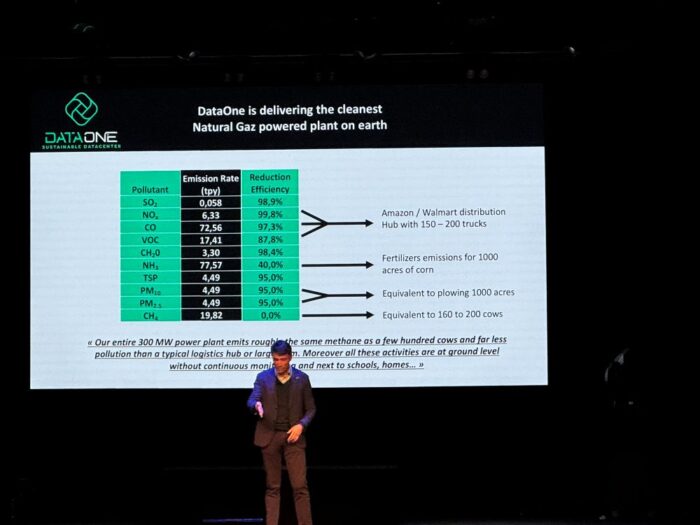
The technology described could be transformational as the AI industry moves to “scale at all costs,” making them more (nowhere near completely) sustainable in terms of water use and pollutant output. According to Mr. Beyney, the Vineland data center will use natural gas engines to power 85% of the operation. Almost 95% of most of the pollutants discharged by the engines will be captured (see fig.2), although you will notice CO2 is not listed. The savvy CEO was prepared with comparisons for the pollutants not captured, equivalent to the fertilizer emissions of 1000 aces of farmland or a few hundred cows (which actually emit a significant amount of methane). So, the fact is that while some of the toxic emissions will be reduced compared to other data centers, this facility will still contribute significantly to the air pollution of Vineland and surrounding areas and add greenhouse gases to the atmosphere.
Water
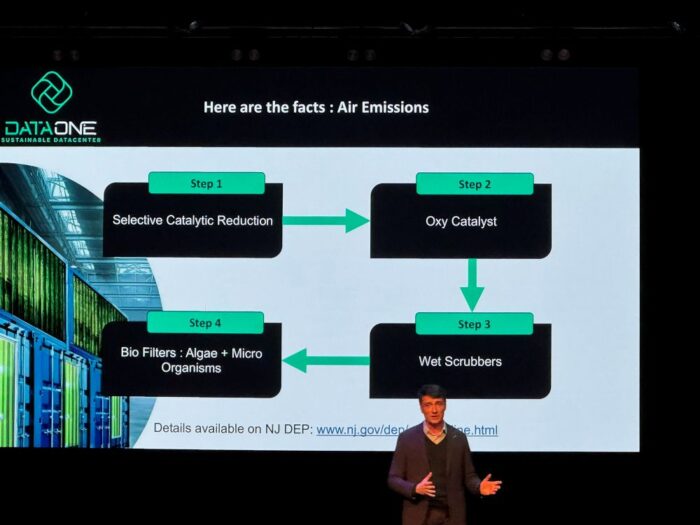
As part of this new combination of technologies, Mr. Beyney promises that other than an initial injection of millions of gallons of water obtained from the city’s MUA to get the system started, the data center will not use municipal sources or the underlying KC Aquifer for its operations. Through a four-step process which includes selective catalytic reduction, an oxy catalyst, wet scrubbers, and biofilters (alga + microorganisms), the data center will pull its own water from the atmosphere (through exhaust condensation) and recycle or break down the captured air pollutants. Does it sound too good to be true yet? If the temperature gets above 104 degrees Fahrenheit (40 degrees Celsius according to the French CEO) the system will be required to use stored water. While some storage will be available on site, it is likely that in a prolonged heat wave, the data center would, in fact, need to use water from the city to supplement its operation.
Other promises
Throughout the presentation and the subsequent Q/A, Mr. Beyney continued to claim that he was presenting only the facts related to his unproven combination of technologies. He acknowledged that the town hall event should have been conducted months ago before construction. Mr.Beyney can be given some credit for his courage and endurance for standing up there for three hours talking to and engaging with a sometimes hostile, but mostly well-mannered crowd. Overall, there seemed to be a sense of defeat in the room. This was already happening. Nothing anyone said would stop construction. Like the beginning of the onslaught of massive distribution centers back in the time of COVID, the state and individual communities are unprepared. Admittedly, this development was not on Pinelands Alliance’s radar until a few months ago. It is technically located outside of the Pinelands but is being built over our beloved KC Aquifer, so any overconsumption of water resources will have impacts inside of the Pinelands.
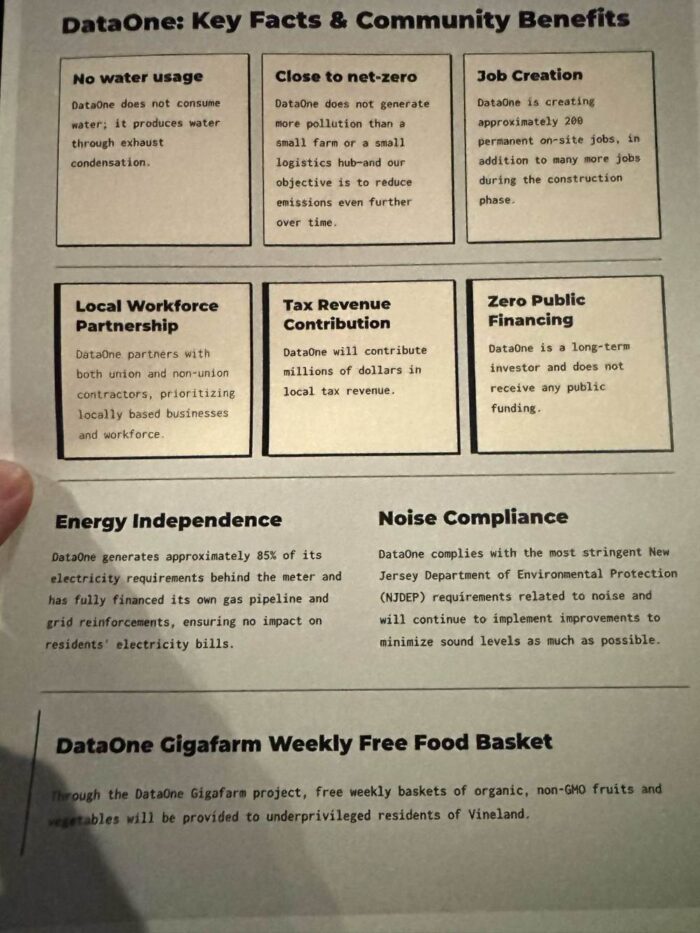
But, the people of Vineland (and Monroe Township) are not alone. In Vineland there is still work to be done to ensure environmental standards are met (ideally exceeded). For the community of Vineland, we must also work to ensure this data center becomes what it is promised to be, a model for (more) sustainable data centers that also supports the community and offsets its impact in every way possible. An announcement was promised regarding other community benefits in the near future which we will be monitoring. Mr. Beyney also laid out the plan for a vertical farm to be constructed which will provide direct food assistance to underserved Vineland residents in the form of organic, non-GMO produce boxes while also assisting local farmers in extending their growing season. DataOne and its customer Nebius are both expected to pay millions of dollars of taxes while the data center is in operation, create approximately 200 permanent on-site jobs in addition to the construction jobs, and will now rely on no public financing for the project. There was a $6 million dollar equipment loan agreement, but due to public outcry, DataOne has cancelled that prospect. Mr. Beyney stated that this was to the detriment of the community because they would have paid $450,000 in interest to the township for the loan.
Moving Forward
There are whispers of another potential data center being proposed in Williamstown, Monroe Township. We must collectively learn our lessons quickly from what has happened in Vineland because more of these projects are coming. We must remain vigilant, demand transparency, and enact new layers of protection. Even if the DataOne project becomes everything it is promised to be, it will still degrade the local environment and negatively impact the lives of those living directly adjacent to it. We cannot assume that other data center developers following this playbook will even feign sustainability.
Unlike Vineland, the property in question in Williamstown is within the Pinelands boundaries. This should provide additional protections, but that remains to be seen. Pinelands Alliance will be monitoring both of these projects closely with a focus on Pinelands Commission actions, the misuse of redevelopment to mask local zoning decisions, and the enforcement of the Kirkwood Cohansey Aquifer rules meant to protect against the sort of depletion expected from a typical data center’s water use. (Read more on our Data Center Hot Issue Page).
At the Alliance, we will continue to stand side by side with those communities that collectively believe data centers would have negative impacts on their long-term health and their local environment. We will also continue to advocate for New Jersey’s Green Amendment, which will help empower individuals and communities by elevating the right to clean air, pure water, and healthy environments in the state constitution (see our Green Amendment Hot Issue Page) and providing a path to prevention rather than remediation and mitigation. This could be a powerful tool in the ongoing fight against data centers in the absence of specific regulations that are often too slow in the making. (see Maya van Rossum of the Delaware Riverkeeper and Green Amendments for the Generations discuss the fight against data centers in PA – AI & Data Centers – NOT SO FAST! #GreenAmendment protections have impo… | TikTok).
If there are indications that a data center may be coming to your town, please contact us or submit a tip here.

Comprehensive & helpful article. I live in Vineland. Thanks for all the support you can give us in managing this blight on our community.
Well written, I a local resident less than 2 miles away have gone to 3 council meetings, and the town hall meeting. When I walked out of the town hall mtg, I thought, a European concept being brought here won’t be that bad, thie existing AI centers already running, have proved to use much water and electricity at the cost of the residents. If this Frenchman is true to his word, sounds too good to be true and since it’s the first center he’s built in the US, who knows. I know one thing for sure, the elected politicians here in Vineland need to be replaced, their lack of letting it’s voters know what was going on right i front of our eyes if a true political mistake. I pray that if this thing gets fully operational it’s with the EPA and the DEP oversite. I understand that the air permit is in being looked at now. The DEP has a new director so maybe he’ll actually look into our concerns with a clear head and do the right thing.
Although the footprint of the data center in Vineland is outside of the Pinelands boundary, the 36 or so cruise ship engines from Bergen being deployed onsite will impact the air quality well inside of the Pinelands boundary.